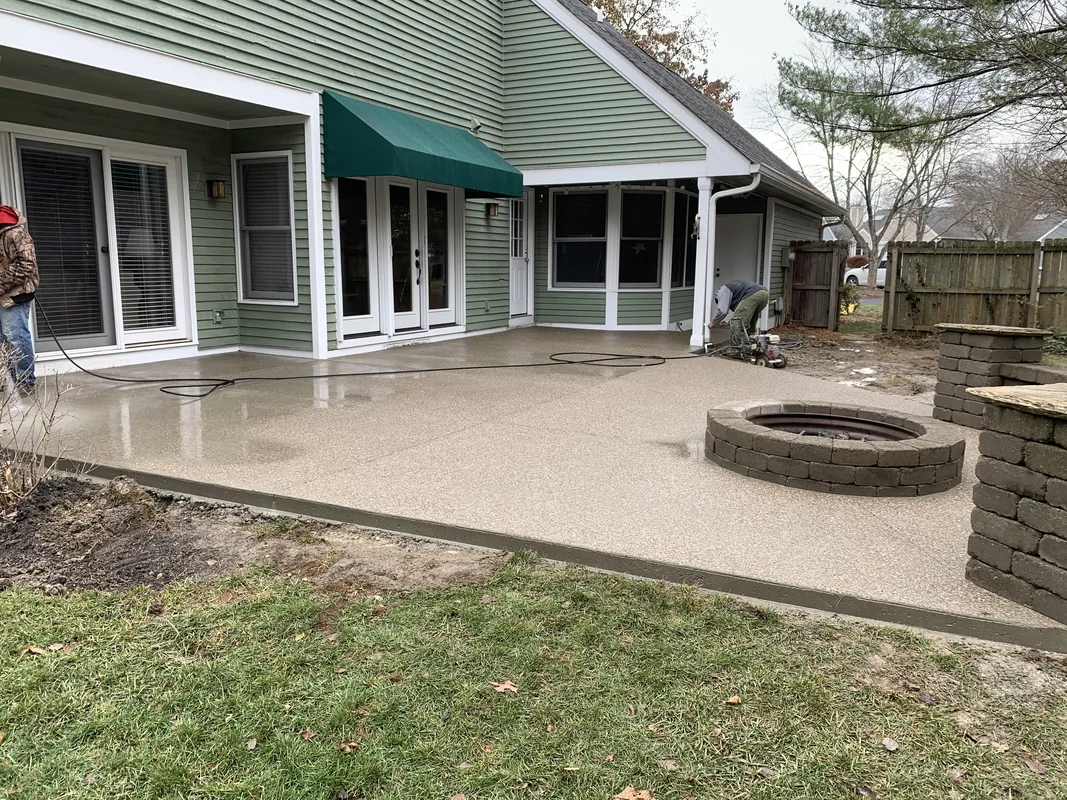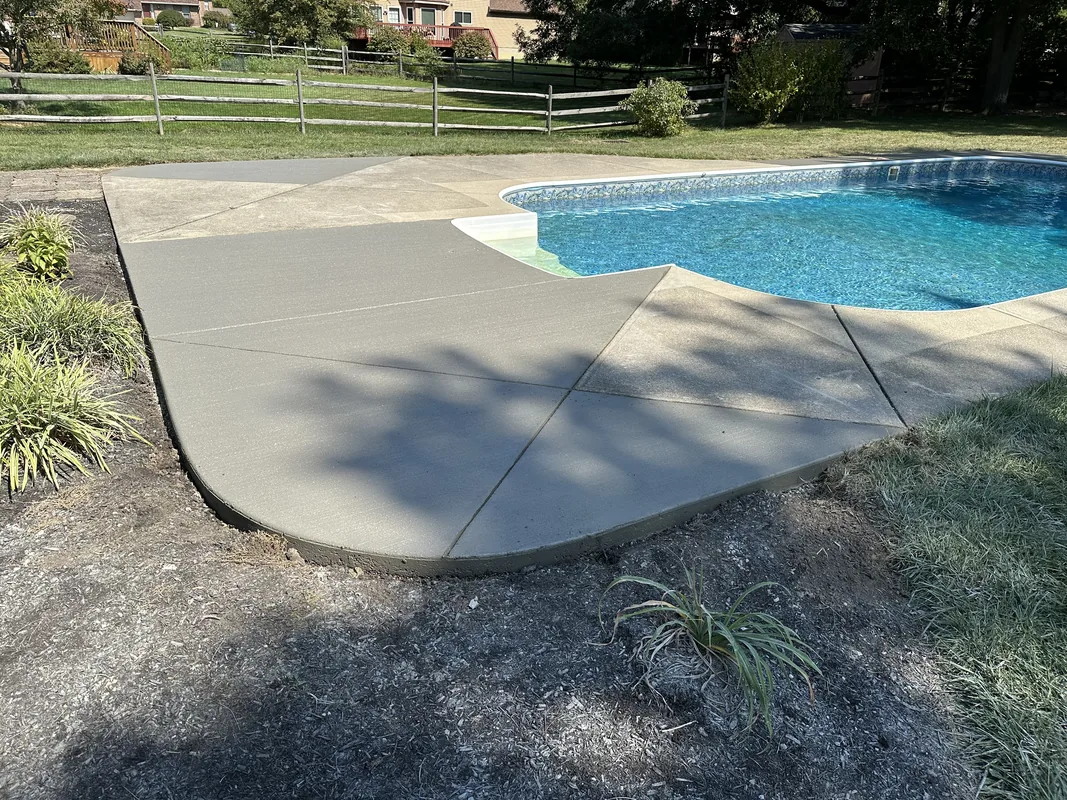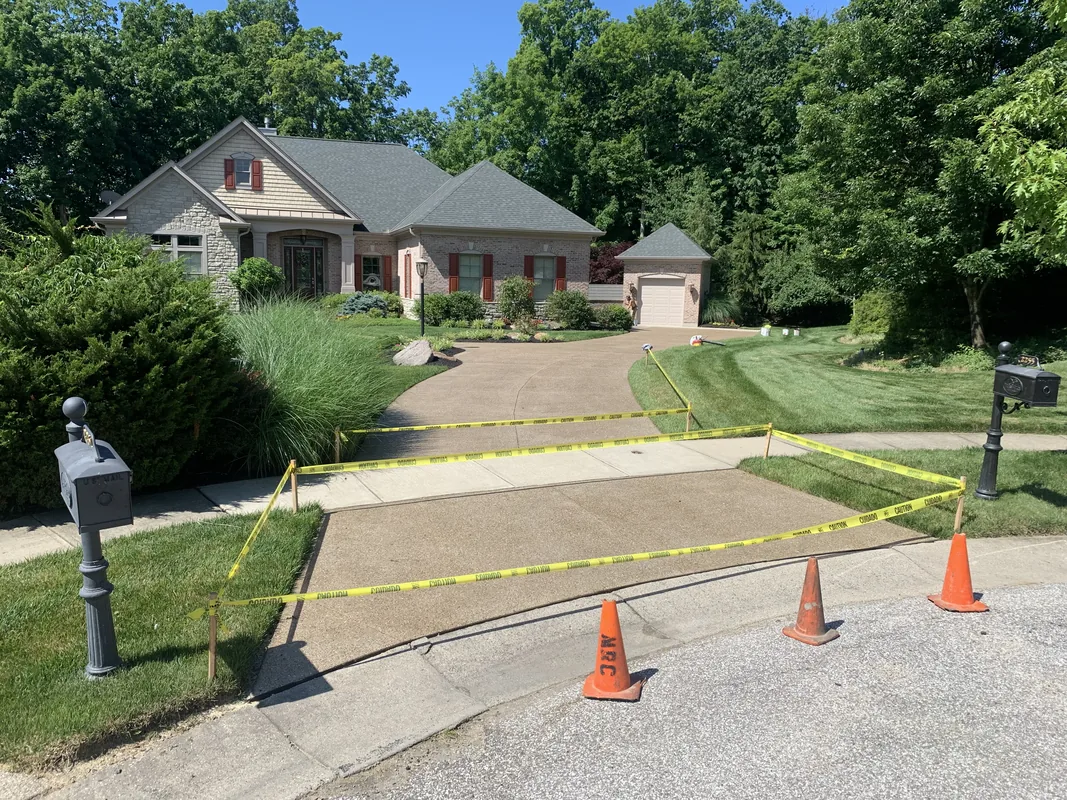
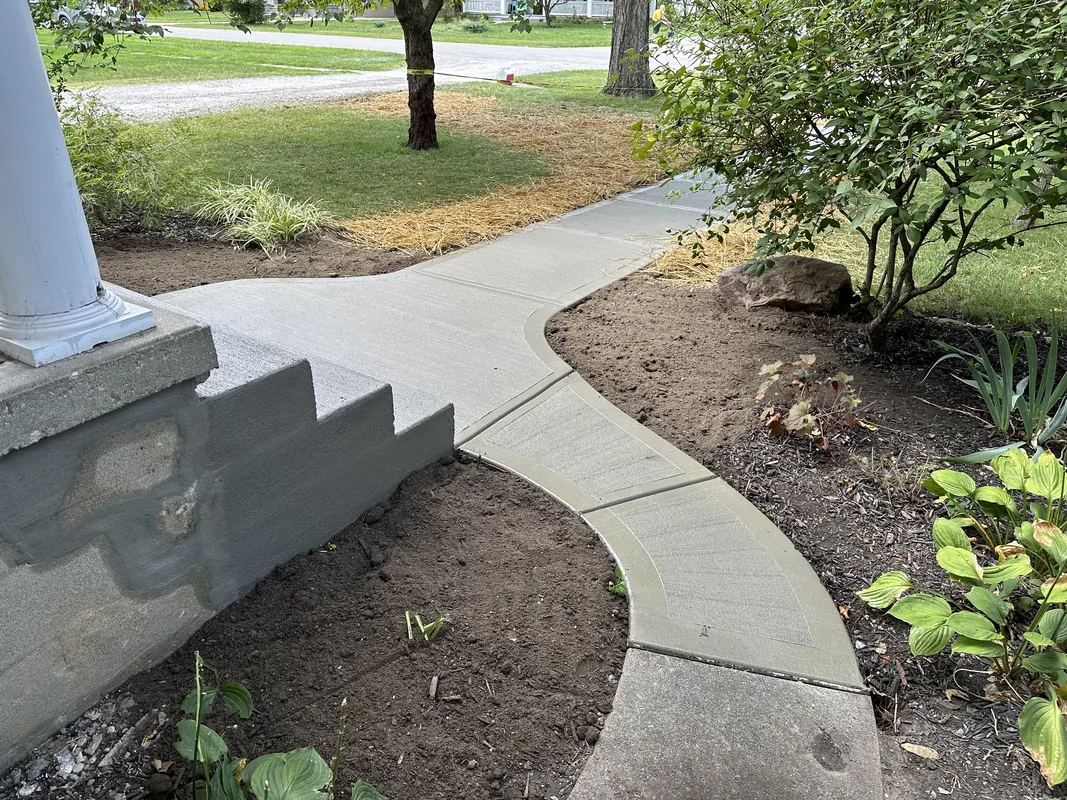
The visible part of a concrete project is the pour. Most of the decisions that affect how the slab performs happen before the truck arrives.
Here is a plain-language look at the steps MRC Concrete, LLC considers when planning new concrete work in Greater Cincinnati.
Preparing the subgrade
A slab is only as stable as the ground beneath it. The area is excavated, the soil is graded and the subgrade is compacted before anything else happens.
Good preparation helps reduce settling, which is one of the most common reasons sidewalks and driveways become uneven. Drainage is considered at this stage too, because water moving under a slab can wash away support over time.
Forms and reinforcement
Forms are set to the planned shape and elevation of the concrete. They establish the edges of the slab and the direction of its slope.
Where a project calls for reinforcement, it is positioned after the forms are in place and before the concrete is placed. The size and type of reinforcement depend on how the slab will be used.
Choosing the mix
Concrete is a blend of cement, other cementitious materials, aggregate, water and chemical admixtures. It hardens through hydration, a chemical reaction in which water reacts with cement and bonds the components into a stone-like material.
The mix is selected for the job. Strength, slump, aggregate size and air entrainment all matter. Air entrainment is especially relevant where freeze-thaw cycles are common, because it gives water room to expand inside the concrete.
Driveway estimates also take slope, soil, usage and weight load into account. Those conditions shape both the mix and the preparation work needed before placement.
Placement, finishing and curing
Once the concrete arrives, it is placed, distributed and finished before it hardens. The finish determines the texture and appearance of the surface, from a simple broom finish to a decorative treatment.
Curing begins right after finishing. Concrete continues to gain strength for days after the pour, so heavy traffic is usually kept off during the early period. Rushing that stage can shorten the life of the slab.
Weather and timing
Temperature affects the schedule. Hot weather can make concrete set faster, while cold weather slows hydration and requires protection while the slab cures.
A typical driveway can be ready in less than a week, depending on weather and supply availability. Discussing timing up front helps set realistic expectations for when the area can be used.
Questions to ask before work begins
A useful estimate conversation covers more than the size of the slab. Ask about the condition of the existing surface, the preparation included, the mix being used and the expected curing period.
If the area currently has cracked or settled concrete, ask whether repair or removal is part of the plan. MRC Concrete, LLC lists repair and replacement options alongside new driveway, patio and walkway work.
Call (513) 470-4373 or use the Contact Us page to discuss a new concrete slab in Greater Cincinnati.