A cracked driveway or a sunken sidewalk does not automatically mean the whole slab has to come out. The right answer depends on what caused the damage, how far it has progressed and what the surface is used for.
MRC Concrete, LLC lists concrete repair and replacement options for residential and commercial properties in Greater Cincinnati. Understanding the difference helps you ask better questions when you request an estimate.
Common signs of concrete damage
Concrete shows distress in a few recognizable ways. Hairline cracks can appear as the slab shrinks during curing. Wider cracks, chipped edges and spalling often point to water getting below the surface or to repeated freeze-thaw cycles.
Uneven sections are another clue. A sidewalk that has settled next to a stable section, or a driveway that slopes toward the garage instead of away from it, suggests movement in the soil or base beneath the concrete.
Staining and a rough, flaking surface usually mean the concrete is absorbing water. That condition can often be improved with cleaning and sealing, provided the slab itself is still sound.
When repair makes sense
Repair is a good fit when the damage is local and the rest of the slab is in decent condition. Small cracks and minor chips can be cleaned and sealed. Worn surfaces can sometimes be resurfaced with an overlay rather than removed.
The goal is to address the visible problem and the reason it appeared. If water is pooling against the slab, for example, drainage may need attention at the same time as the crack repair.
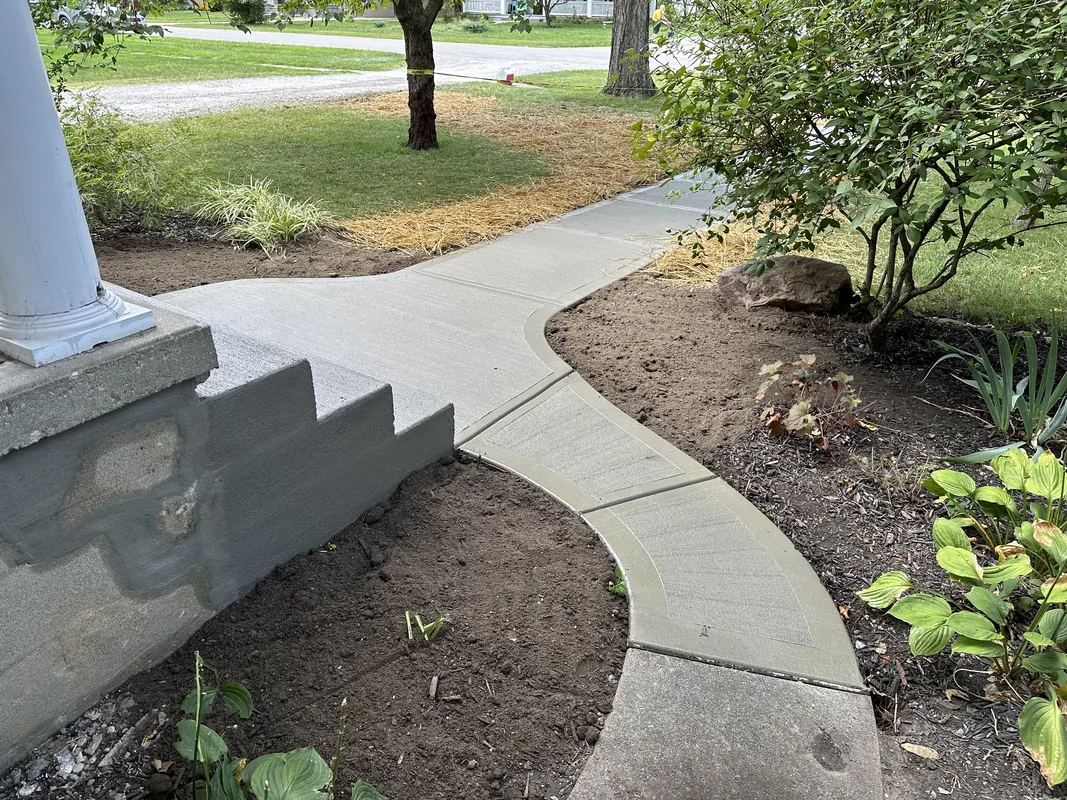
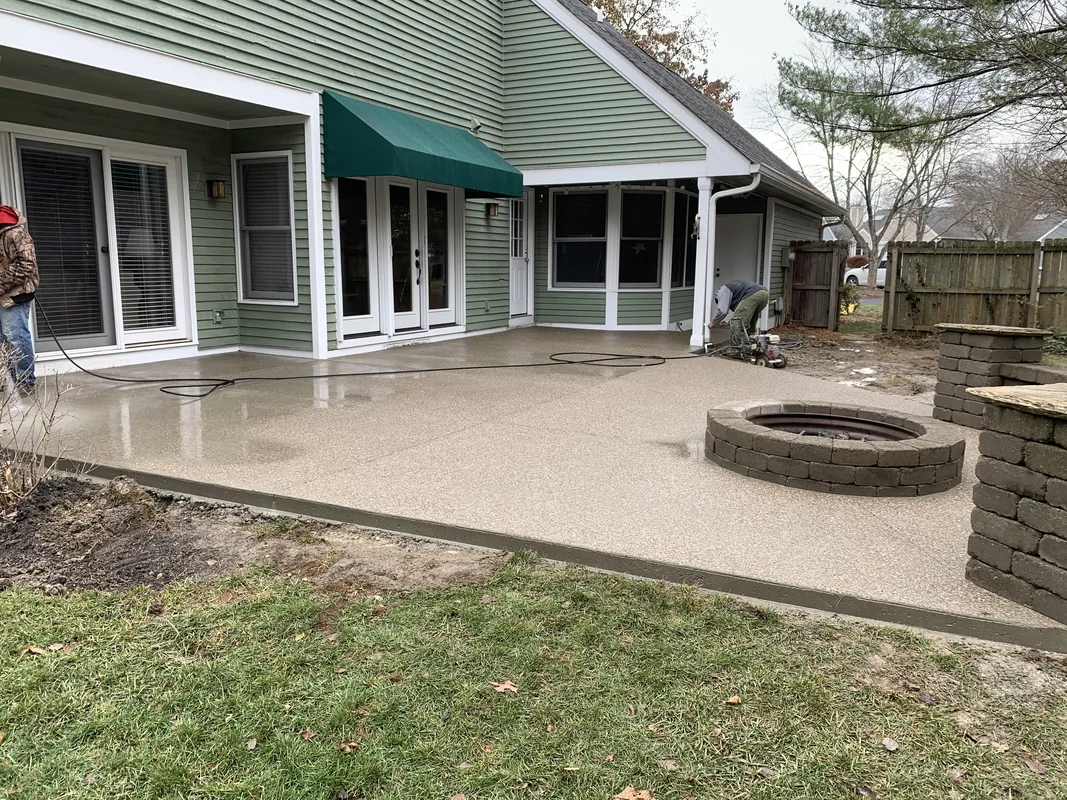
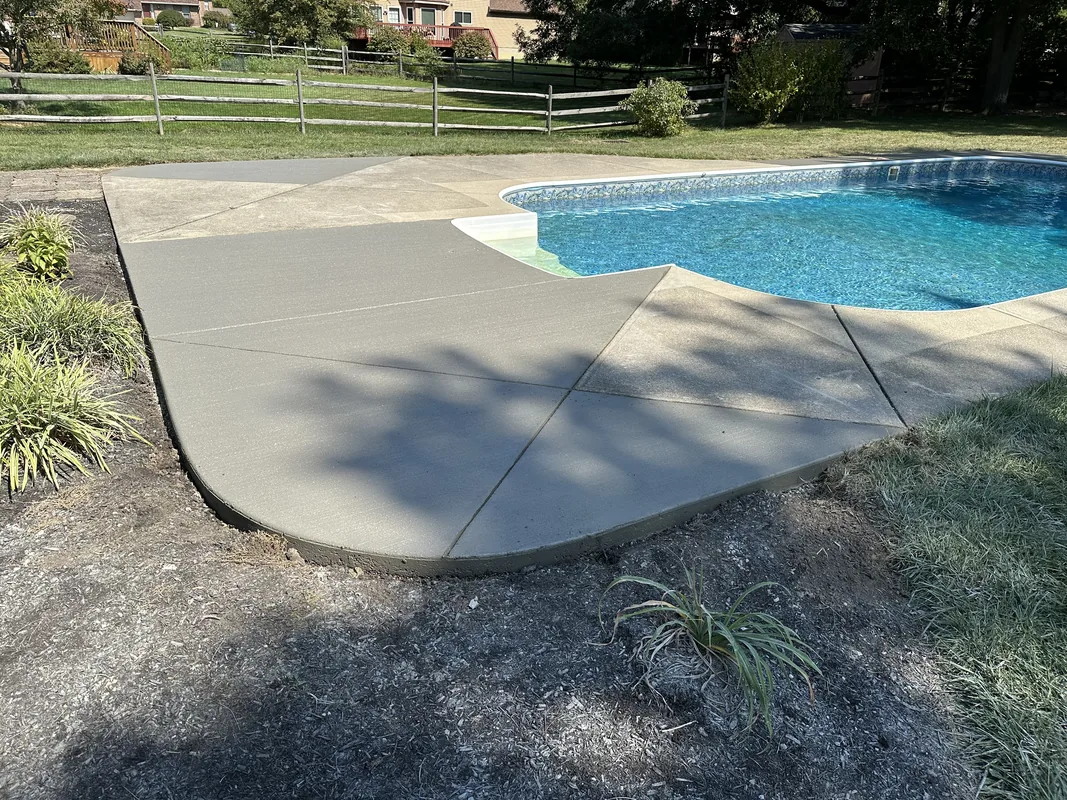
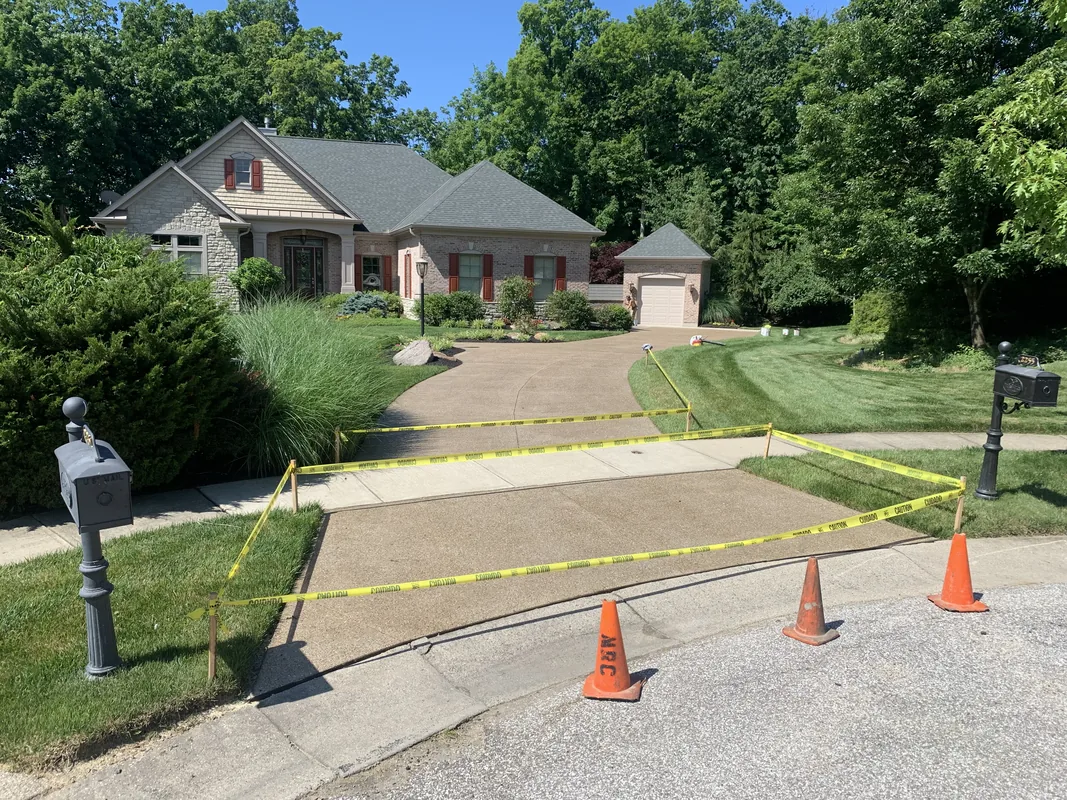
MRC Concrete, LLC handles concrete repair for cracks, chips, worn surfaces, uneven slabs and sunken concrete. Projects include garage floors, driveways, patios, sidewalks and basement floors.
When replacement makes sense
Replacement becomes the practical option when concrete is badly broken, severely cracked or deteriorated throughout. A slab that has lost its structural integrity cannot be made sound with a surface treatment.
Small surface cracks and worn areas are different problems. They can often be cleaned, sealed or repaired without replacing the whole slab.
The deciding factors are the extent of the damage, the condition of the base and how the area is used. A heavily trafficked driveway and a quiet garden path may warrant different approaches.
Why the cause matters
Treating a symptom without addressing its cause tends to be short-lived. A crack sealed over an active drainage problem will likely return. A patch placed on a slab that is still settling will crack again.
That is why a conversation about the site is as important as a look at the concrete. Slope, soil conditions, water runoff and weight load all play a part in how a slab performs over time.
Ask about your specific slab
If you are unsure which route to take, describe what you see and where it is located. Photos of cracks, settling or chipped edges help explain the condition before anyone visits the property.
Call (513) 470-4373 or use the Contact Us page to discuss concrete repair or replacement in Greater Cincinnati.